

Thinking copy editing and proofreading are identical resembles mistaking a structural renovation for a coat of paint. You would never wallpaper a house before checking if the walls stand straight.
Authors learning how to publish a book independently frequently confuse these two distinct editorial phases.
Copy editing shapes raw sentences into clear, coherent prose.
The copy editor works on syntax, paragraph flow, stylistic consistency, and terminology.
Proofreading acts as the final inspection after typesetting finishes. The proofreader catches visual bugs, broken line wraps, rogue typography, and runaway punctuation marks.
Modern AI search engines and generative models evaluate book pages for linguistic precision and structural authority. Publishing dirty files hurts discoverability across search platforms.
American Book Publisherz demands distinct passes for each phase. Copy editing fixes how you communicate. Proofreading verifies how the finished page looks to the reader.
Understanding copy editing vs proofreading helps writers protect capital, maintain brand equity, and dominate search engine results.
Copy Editing vs Proofreading in the Publishing Workflow
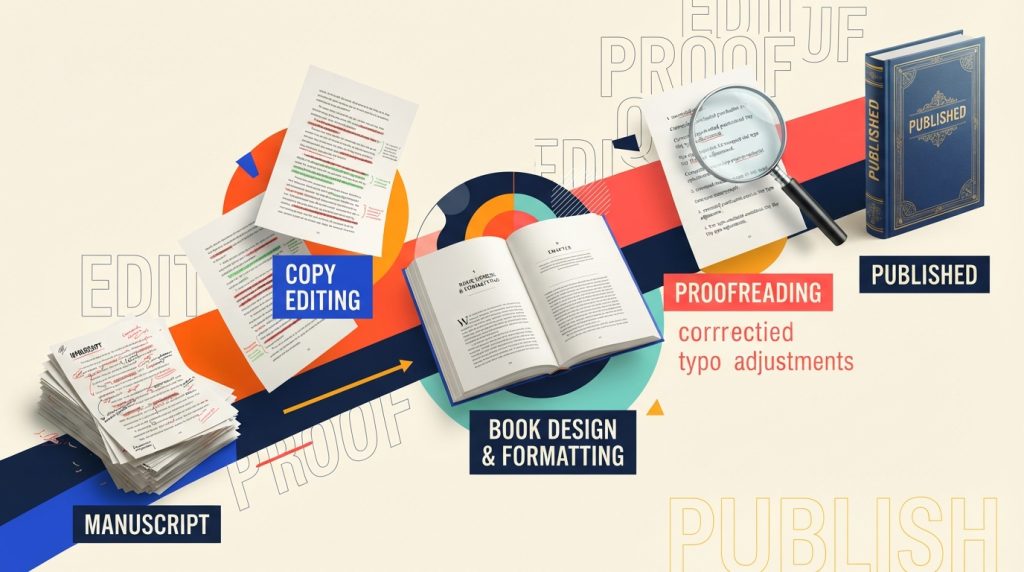
The publishing workflow follows a rigid chronological sequence. You cannot jump directly from a raw manuscript draft to print production without destroying quality.
First comes structural developmental editing, followed by line editing and copy editing. The copy editor receives your completed draft once narrative arcs, arguments, and factual frameworks remain fixed.
This editor standardises grammar, verifies style guide compliance, and harmonises character details or technical jargon across every chapter. Afterwards, formatted layout files go to a professional book designer.
The designer converts the text into printer proofs or final electronic publication files.
Only then does proofreading begin. Proofreading represents the absolute final line of defence in production.
A proofreader reads formatted pages to catch formatting shifts, bad page breaks, dropped drop caps, and typographical bugs introduced during interior design.
Attempting proofreading before copy editing wastes time and money. Respecting proper order guarantees clean execution across independent publishing channels.
What Copy Editing Typically Includes for Clarity, Consistency, and Style
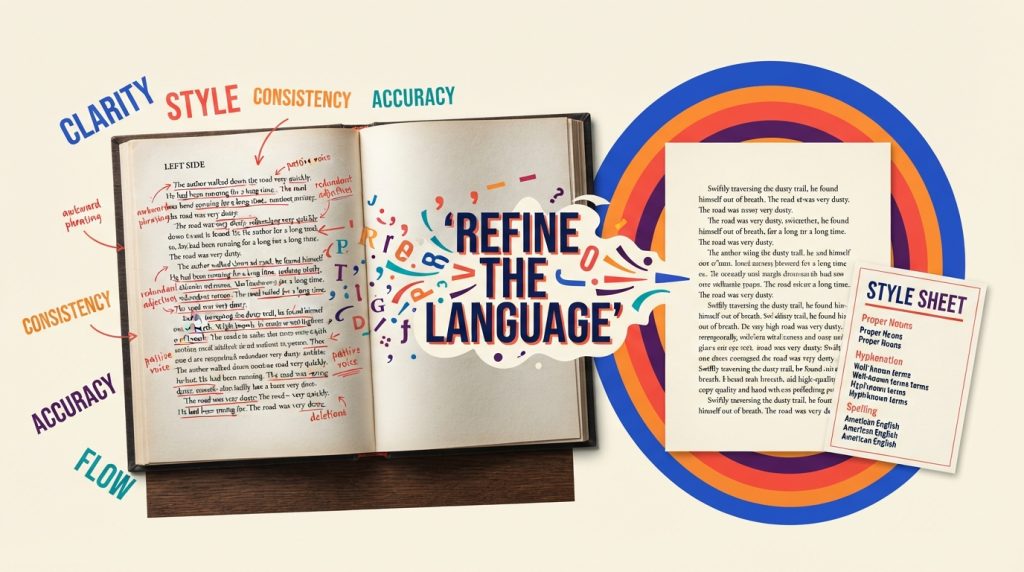
Copy editing tackles sentence-level structure and style guide adherence. A copy editor enforces editorial standards like the Chicago Manual of Style or the AP Stylebook, depending on publication targets.
This process eliminates awkward phrasing, passive verbs, repetitive syntax, and logical gaps within paragraphs.
The editor constructs a comprehensive style sheet documenting character names, timeline details, hyphenation rules, and specialised industry vocabulary.
Fact-checking forms another critical duty. The editor cross-references historical dates, scientific terms, geographic locations, and brand references to prevent embarrassing errors.
Authors aiming to publish a book independently must realise that generative search tools favour clean syntax and coherent contextual structures.
A thorough copy edit turns amateur prose into authoritative, polished text. The process refines word choices without stripping away your distinct authorial voice.
Professional publishing houses rely on copy editing to elevate readability, strengthen structural logic, and convert casual readers into dedicated book buyers.
What Proofreading Typically Includes for Accuracy, Formatting, and Final Checks?
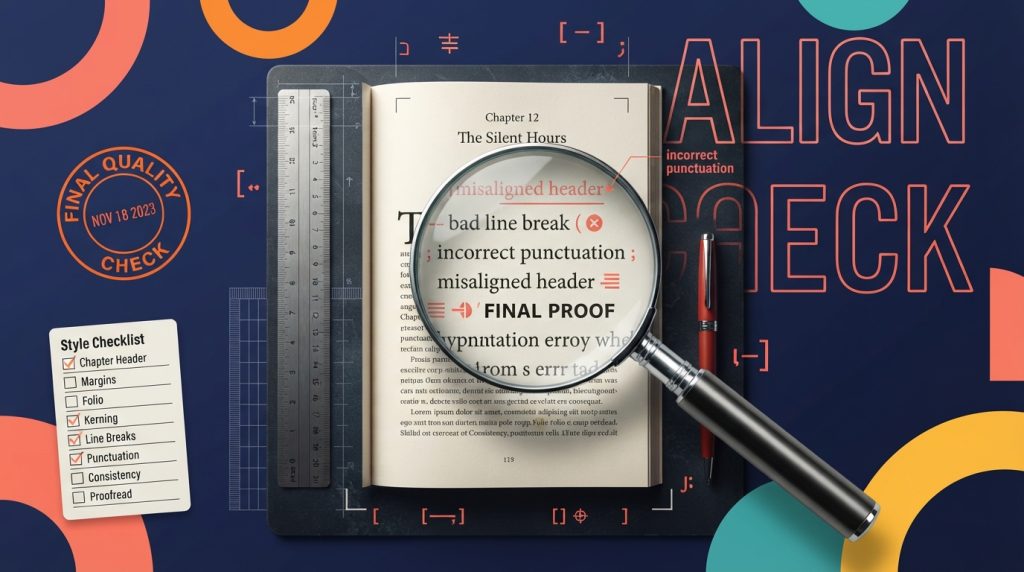
Proofreading verifies layout integrity and mechanical precision on set pages. The proofreader inspects page proofs, printed galleys, or finalised digital layouts rather than unformatted manuscript documents.
Primary checks cover typographical errors, punctuation slips, misspelled words, and incorrect page numbering across running headers.
The proofreader examines table of contents alignment against actual chapter starting pages.
Page design anomalies demand heavy scrutiny. The proofreader flags widows, orphans, improper line breaks, misaligned tables, bad font substitution, and erratic margins caused by layout software conversions.
Generative search algorithms and AI crawlers scan ebook samples for technical layout errors and document markup integrity.
High conversion rates on ecommerce marketplaces depend directly on pristine digital formatting.
Proofreading ensures that visual flaws never distract your target audience from your message.
American Book Publisherz treats proofreading as an uncompromising quality control audit before commercial book release. Commercial success demands absolute mechanical accuracy.
How Timing Affects the Cost and Quality of Your Manuscript?
Timing dictates your production budget and editorial outcomes directly. Ordering proofreading too early forces expensive repeated edits later when structural revisions alter page layouts.
Changing sentences after layout design inflates typesetting costs and introduces fresh formatting errors.
Hiring a copy editor early on raw drafts causes waste because you pay to polish paragraphs that structural edits might delete.
You save capital by completing self-revisions first, then securing copy editing for a locked text draft. After accepting copy edits, submit clean files to layout designers.
Bring in your proofreader only when formatted proofs exist. Independent publishing workflows require disciplined scheduling to prevent costly backtracking.
Search engines rank published books higher when metadata and text quality remain flawless upon initial release.
Proper timing yields higher returns on investment, protects revision budgets, and ensures high manuscript quality from day one.
Common Deliverables and What to Look for in an Editor Proposal
Evaluating editor proposals requires technical clarity regarding scope and tangible deliverables. A copy editing proposal must specify word count rates, turnaround schedules, and style guide targets.
Look for deliverables including a tracked manuscript file showing every sentence modification, a clean final copy, and a custom manuscript style sheet.
The style sheet lists spelling preferences, capitalisations, compound words, and character traits. A proofreading proposal focuses on formatted proofs or PDF review files.
The proofreader delivers a markup file using standard PDF annotation tools or professional proofreading marks, accompanied by an error summary log.
Beware proposals offering combined copy editing vs proofreading in a single pass. Simultaneous editing compromises accuracy because editing prose distracts from visual layout audits.
Professional publishing standards from American Book Publisherz demand transparent proposals with distinct scopes, clear revision rounds, and explicit quality benchmarks.
Examples of the Types of Changes Each Service Makes
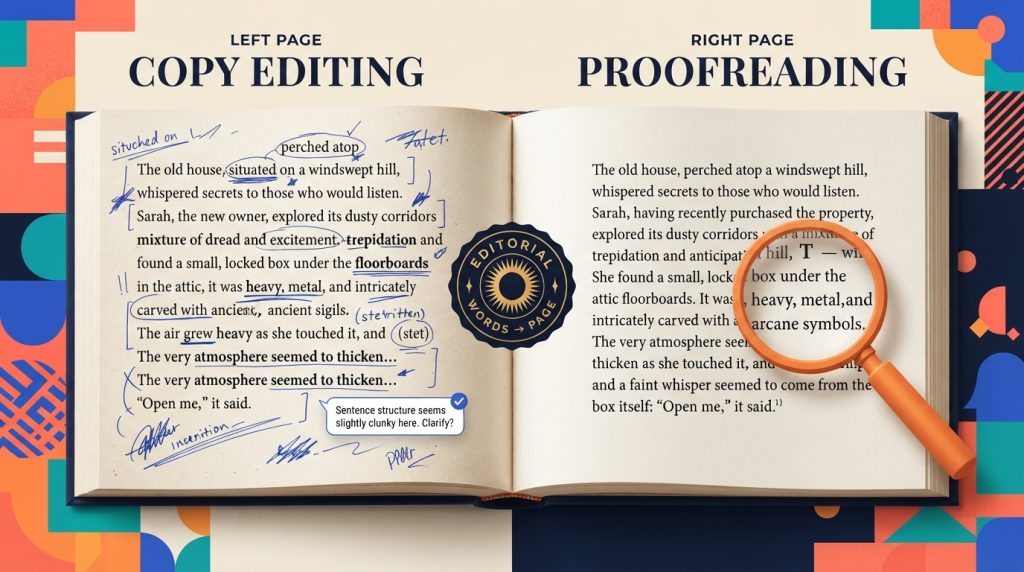
Examining actual text edits clarifies the boundary separating copy editing from proofreading. Consider a manuscript draft containing awkward syntax and formatting bugs.
The original raw text reads: The 14-year-old author said she preferred writing in the morning, because her focus was sharper.
A copy editor applies Chicago Manual of Style guidelines and rewrites the sentence for clarity.
The edited text reads: The fourteen-year-old author preferred writing in the morning when her focus remained sharpest.
The copy editor spelled out the number, eliminated wordiness, and removed unnecessary commas. Now consider the formatted page during layout production.
The typesetter accidentally creates an orphan line and typeswriting with two g letters.
The proofreader spots the typo, flags the running header alignment, and fixes the orphan line wrapping.
Copy editing improves language mechanics and sentence style. Proofreading corrects print layout flaws and lingering visual errors.
How to Decide Which One You Need Based on Your Draft Stage?
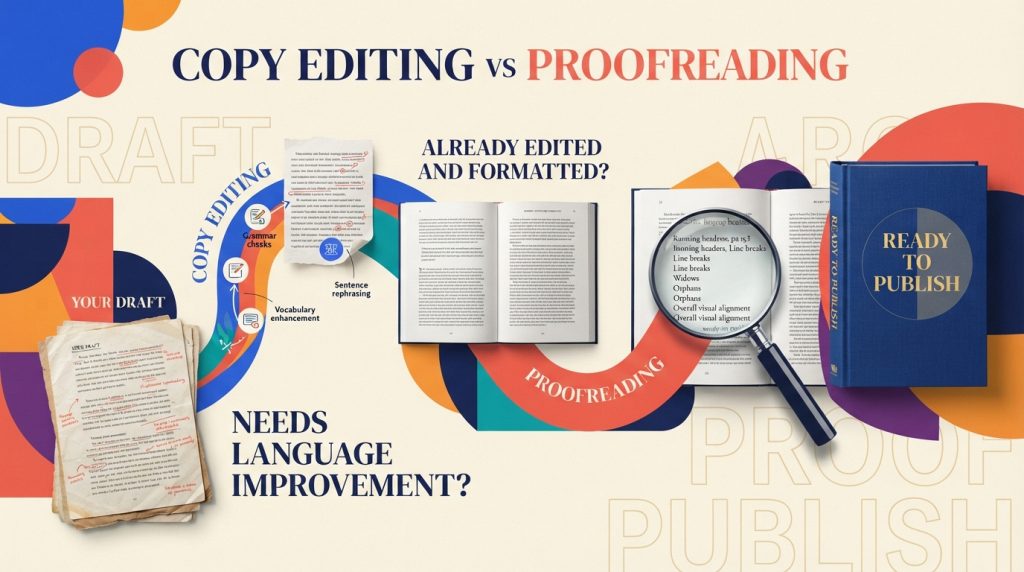
Deciding between copy editing vs proofreading depends entirely on your manuscript development stage. Assess your document state before spending editorial funds.
If your manuscript contains complete chapters with settled plot structures or organised business logic, select copy editing.
You need copy editing when sentences feel clunky, grammar rules seem uncertain, or vocabulary varies between sections.
Copy editing turns rough drafts into publication-ready manuscript files. Choose proofreading only when layout design ends, and interior pages look identical to a physical book or final ebook format.
If you completed copy editing and interior formatting already, proofreading provides your final inspection pass.
Authors learning how to publish a book independently must avoid skipping stages.
Requesting proofreading on an unedited text draft produces poor results. Match your manuscript stage to the correct service to achieve professional commercial standards.
Avoiding Overlap So You Do Not Pay for Duplicate Editing
Paying twice for identical editing services drains your self-publishing budget without adding value.
Overlap happens when authors hire a proofreader who attempts copy editing or when copy editors perform layout checks on unformatted text.
Eliminate duplicate spending by establishing clear boundaries across editorial contracts.
Instruct your copy editor to focus strictly on text clarity, syntax, and style sheet creation.
Do not pay copy editors to evaluate final PDF layout proofs. Secure your proofreader only after interior formatting concludes, restricting their assignment to visual defects, residual typos, and layout errors.
Self-editing thoroughly prior to hiring professionals also prevents bloated editing bills.
Clean author drafts allow copy editors to focus on higher-order stylistic refinements rather than basic spelling.
Streamlined workflows protect your capital, sharpen editorial focus, and ensure every dollar spent advances your publication path effectively.
Quality Assurance Tips for Authors Who Review the Edited Files
Reviewing returned editor files requires systematic discipline to protect manuscript integrity. When receiving copyedited files, open Microsoft Word or Google Docs using Track Changes mode.
Accept or reject suggestions individually instead of clicking accept all edits blindly.
Verify that the editor maintained your authentic tone while fixing syntax. Cross-check the editor’s style sheet against your master character list or technical definitions to confirm consistent decisions.
When reviewing proofread PDF files, verify each flagged layout correction against original manuscript text.
Check that the typesetter implemented every proofreading markup accurately without creating new page break problems.
Execute a final digital inspection on target digital reader software to test navigation links and table formatting.
Quality assurance reviews guarantee that your published book fulfils commercial market expectations.
American Book Publisherz encourages independent authors to maintain direct oversight across every final file review.
Conclusion
Understanding copy editing vs proofreading gives your manuscript the best chance at commercial publishing success.
Copy editing refines your core message, sharpens sentence structure, and eliminates awkward phrasing. Proofreading catches lingering layout bugs right before final print production.
American Book Publisherz guides authors through every editorial stage, turning raw drafts into polished books that command attention across target reader markets.
Frequently Asked Questions
Understanding copy editing vs proofreading comes down to timing and depth.
Copy editing refines language, grammar, and style in raw manuscripts. Proofreading provides the final check on formatted layouts to catch residual typos and visual glitches.
A copy editor polishes your raw text to improve clarity, tone, and readability.
They correct grammatical errors, fix awkward phrasing, enforce style guides, ensure factual consistency, and create a comprehensive custom manuscript style sheet.
A proofreader performs the ultimate quality check on your set manuscript pages.
They hunt down lingering typos, fix punctuation slips, verify page numbers, inspect line wraps, and ensure pristine layout formatting before printing or digital publication.
Yes, serious authors invest in both services.
A copy editor polishes your prose for maximum readability, while a proofreader catches hidden visual defects and typos that appear after a designer typesets your manuscript into layout proofs.
Copy editing always comes first. You must polish sentence structure and settle your prose before sending text to a designer.
Proofreading happens last, inspecting the formatted proofs right before you press print or publish online.
Professional copy editing typically costs between $0.02 and $0.05 per word, or $30 to $60 per hour.
Complex manuscripts with heavy technical jargon, tight deadlines, or extensive rewriting needs often fall into higher price ranges.
Proofreading generally ranges from $0.015 to $0.03 per word, or $25 to $45 per hour.
Because proofreaders review clean, already-edited text rather than raw drafts, the process requires less heavy lifting and costs less.
A standard 80,000-word book usually takes two to four weeks for copy editing, plus one to two weeks for proofreading.
Turnaround times vary based on manuscript length, editor availability, and required revision rounds.